Luxury High Rise Suites USA: Definitive Guide & Skyscraper Analysis
The architectural evolution of American metropolitan skylines has transformed high-density vertical real estate into a specialized domain of ultra-prime hospitality. Discerning corporate directors, family office managers, and private asset curators increasingly evaluate top-floor residential inventory through structural engineering metrics rather than mere aesthetic luxury. When examining premier vertical properties, securing luxury high rise suites usa requires navigating complex wind-load physics, acoustic isolation barriers, and rigorous vertical transport logistics. Consequently, managing high-altitude accommodations demands an editorial perspective that prioritizes structural resilience, safety systems, and long-term asset security.
Furthermore, the domestic market for vertical apex properties operates under strict municipal zoning codes, seismic or wind-sway tolerance thresholds, and complex multi-owner condominium governance structures. Standard hotel booking metrics fail to capture the variables that govern elite vertical stays, such as elevator shaft harmonics and high-altitude barometric HVAC pressures. Therefore, establishing a rigorous framework for evaluating luxury high rise suites usa ensures uninterrupted personal recovery, privacy, and capital preservation across major metropolitan hubs.
Navigating this specialized segment demands an uncompromising editorial approach. Whether securing a glass-walled aerie in Manhattan or a cantilevered penthouse in Chicago, mastering the operational nuances of vertical properties safeguards against mechanical failure and structural discomfort. Ultimately, this comprehensive guide delivers an objective examination of the frameworks, error taxonomies, and strategic methodologies required to govern high-rise travel portfolios with precision.
Understanding “luxury high rise suites usa”
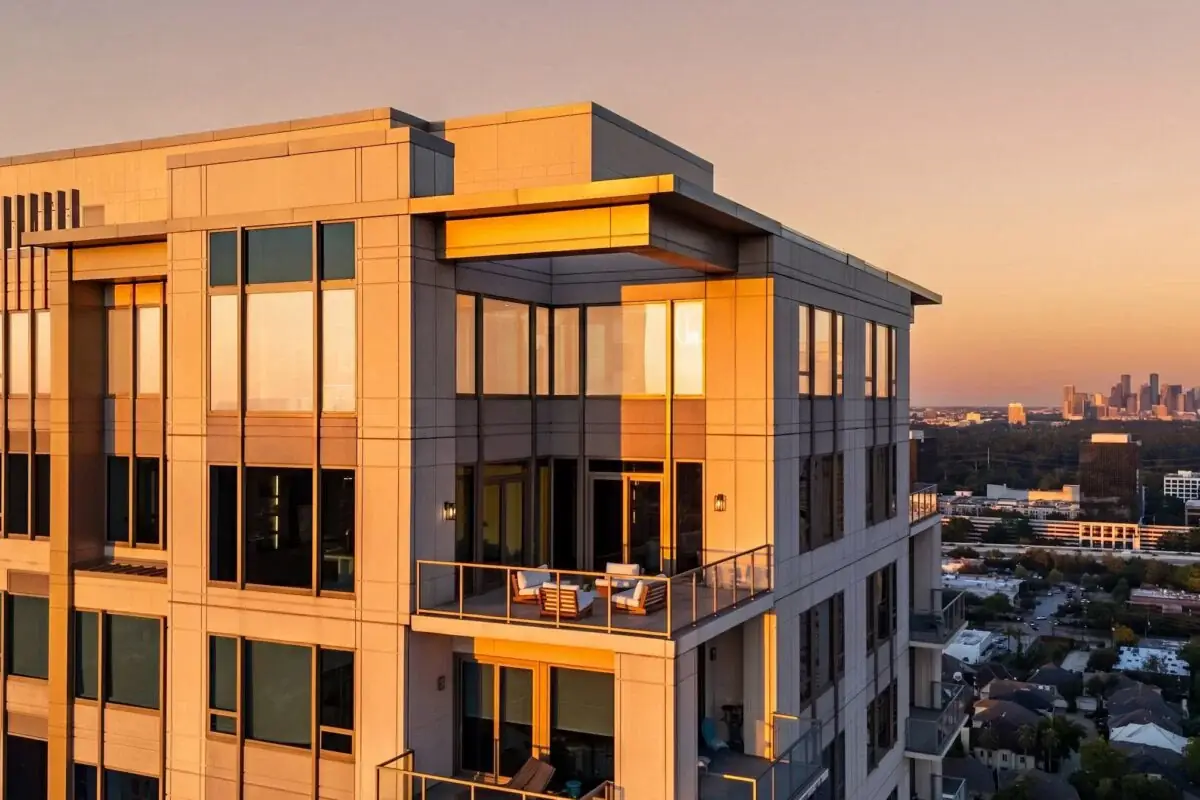
The phrase luxury high rise suites usa is frequently co-opted by consumer lifestyle blogs. These platforms reduce sophisticated vertical architecture to superficial photo galleries and vague skyline views. Consequently, consumer summaries ignore structural realities like high-altitude wind shear, elevator mechanical rumble, and complex fire life safety compartmentalization. In professional asset management, evaluating luxury high rise suites usa requires a focus on measurable architectural parameters. These parameters include Sound Transmission Class ratings for exterior unit separation, stack effect airflow dynamics, and dedicated service elevator access. A common misunderstanding assumes that paying premium nightly rates guarantees absolute silence and complete privacy on the top floors of a skyscraper. In reality, high-altitude environments introduce severe acoustic and mechanical challenges requiring specialized engineering interventions.
Analyzing these operational challenges requires recognizing the tension between open-air vertical transparency and structural environmental control. An analytical manager evaluating a glass penthouse in Miami will find that expansive curtain-wall facades introduce intense solar heat gain and high-altitude wind pressure fluctuations. Planners relying exclusively on surface-level marketing descriptions routinely miss critical operational constraints. Furthermore, mastering the principles behind luxury high rise suites usa involves assessing how skyscraper architects, structural engineers, and property operators collaborate. This coordination establishes optimal operational baselines and asset longevity across diverse urban vertical topographies.
Deep Contextual Background
The historical evolution of American vertical hospitality traces its roots to the late-nineteenth-century invention of safety elevators and structural steel framing. Wealthy urbanites began seeking elevated status and cleaner air above the congested, smoke-filled streets of industrial cities. Properties like the early residential towers of New York and Chicago established a distinct high-rise design vernacular. These early structures prioritized heavy masonry walls and deep window embrasures to mitigate weather exposure.
Throughout the mid-twentieth century, the rise of glass-and-steel international style architecture transformed metropolitan skylines. Architects experimented with lightweight curtain walls, open floor plates, and central core service hubs. Architectural ambition introduced new operational vulnerabilities. High-rise properties struggled with stack effect air movement, solar radiation loads, and complex vertical logistics. Examining the domestic high-rise market requires navigating a mature, competitive sector where boutique ownership groups define the baseline of exceptional vertical execution.
Conceptual Frameworks and Mental Models
Evaluating the operational maturity of vertical luxury retreats relies on structured mental models:
-
The High-Altitude Wind Shear and Sway Index: Measures structural building deflection and occupant comfort thresholds during high-velocity storms.
-
The Vertical Stack Effect Thermal Gradient: Evaluates internal air pressure differentials and natural draft forces moving through elevator and stair shafts.
-
The Skyscraper Acoustic Isolation Ratio: Assesses how successfully a suite dampens mechanical rumble from rooftop chillers and elevator gearrooms.
-
The Metropolitan Vertical Logistical Model: Quantifies operational efficiency for private service elevator routing, luggage transfer, and emergency evacuation.
Key Categories or Variations
| High-Rise Suite Category | Primary Architectural Profile | Core Operational Trade-Off |
| Supertall Glass Penthouses | Cantilevered steel and reinforced curtain-wall structures exceeding one thousand feet | Delivers unmatched panoramic vistas offset by high wind-sway exposure and solar gain |
| Historic Converted Tower Suites | Repurposed 1920s masonry skyscrapers featuring deep-set arched windows | Provides exceptional acoustic mass and historic charm offset by rigid layout limits |
| Mixed-Use Hotel-Branded Towers | Integrated hospitality and residential spaces sharing central elevator cores | Ensures full hotel service integration offset by public lobby transit exposure |
| Boutique Residential Aerches | Low-density urban towers featuring private keyed elevator direct access | Maximizes privacy and security offset by fewer on-site commercial amenities |
| Waterfront Skyline Towers | Glass residential towers positioned directly along major urban rivers or bays | Offers dual marine and city views offset by high exterior window maintenance needs |
| Sub-Penthouse Corner Suites | Strategic mid-to-high floor units balancing height with structural damping | Mitigates severe wind sway offset by slightly reduced vertical perspective |
When applying decision logic to these variations, curators must align suite selection with environmental resilience and privacy requirements. Supertall glass penthouses and waterfront towers suit travelers seeking dramatic visual immersion. Meanwhile, historic converted towers and boutique residential aerches attract family groups prioritizing architectural permanence and privacy.
Detailed Real-World Scenarios
Executing a Secure Executive Residency in a Supertall Glass Penthouse
A technology venture principal requires a two-week quiet writing residency in a supertall glass suite in downtown Chicago.
-
Constraint: The property sits on the eighty-fifth floor, subject to intense winter wind shear and pressure-induced door friction.
-
Failure Mode: High-velocity winds create low-frequency harmonic whistling in the curtain wall, disrupting concentration and sleep.
-
Decision Point: Mandate laminated acoustic glazing maintenance checks and verify the operational status of internal pressure-balancing vestibule doors.
Coordinating a Private Diplomatic Gathering in a Mixed-Use Tower
A family office curator manages an international delegation staying within a branded luxury high-rise in Los Angeles.
-
Constraint: A local seismic tremor occurs during the evening reception, triggering building safety inspection protocols.
-
Failure Mode: Standard public elevators lock down automatically for safety checks, stranding delegation members in the lobby.
-
Decision Point: Contract directly with the property operator to verify the operational readiness and priority override codes of dedicated VIP service elevators.
Planning, Cost, and Resource Dynamics
Executing a procurement strategy for vertical sanctuaries involves balancing administrative oversight expenses and specialized high-rise engineering outlays against the value of urban privacy. The economic model requires analyzing indirect expenses—such as specialized window washing, earthquake or wind insurance premiums, and mechanical acoustic mitigation—against total project expenditures.
| Economic Variable | Financial Variability | Strategic Impact on Asset Evaluation |
| High-Altitude Window and Facade Maintenance | High Capital Outlay | Prevents dirt and mineral accumulation on expansive glass curtain walls |
| Earthquake and Windstorm Insurance Underwriting | Variable Premium Cost | Transfers catastrophic structural risk to institutional underwriters |
| Specialized Acoustic Mitigation Engineering | Dedicated Operating Expense | Ensures indoor silence despite proximity to elevator motors and chillers |
| Skyscraper Vertical Logistics and Security Fee | Variable Professional Fee | Guarantees dedicated service elevator time slots and private loading docks |
Tools, Strategies, and Support Systems
-
Real-Time Building Sway and Wind Trackers: Specialized diagnostic tools monitoring structural deflection and accelerations.
-
Encrypted Vertical Concierge Networks: Direct communication channels with building security directors and private elevator controllers.
-
Automated High-Rise Smoke Evacuation Systems: Computerized damper networks managing stairwell pressurization during emergencies.
-
Specialized High-Rise Legal Counsel: Legal professionals drafting condominium lease agreements and building rule addendums.
-
Industrial Indoor Air Filtration Arrays: Continuous HVAC climate control systems balancing air pressure and humidity across high floors.
Risk Landscape and Failure Modes
The primary operational hazard inherent in vertical sanctuary travel involves underestimating skyscraper infrastructural volatility. Planners frequently assume premier high-rise properties operate with absolute immunity to municipal power grid failures, domestic water booster pump breakdowns, or elevator bank shutdowns. When unexpected mechanical failures occur, vertical mobility can become severely constrained.
Another compounding risk relates to strict building association rules. Many exceptional high-rise properties sit within luxury towers governed by rigorous residential boards that prohibit commercial production, temporary security staging, or unvetted guest traffic. Violating these governance mandates results in immediate fines, legal disputes, and operational disruption.
Governance, Maintenance, and Long-Term Adaptation
Sustaining operational protocols across vertical travel portfolios requires a disciplined administrative governance framework. Family offices and corporate travel teams must institute pre-arrival high-rise audits, verifying that elevator override systems, emergency generators, and fire dampers operate efficiently. If a property manager demonstrates inadequate maintenance of vertical mechanical elements, asset managers must initiate replacement protocols.
Furthermore, risk governance must adapt to shifting urban density patterns, wind load standards, and seismic safety updates. Maintaining ongoing dialogues with structural engineers ensures that partnered property networks invest in resilient high-rise infrastructure. Proactive governance protects capital and guarantees operational excellence across all vertical deployments.
Measurement, Tracking, and Evaluation
-
Interior Mechanical Ambient Noise Floor: Measures decibel levels from elevators and chillers within sleeping zones.
-
Elevator Dispatch and Transit Efficiency: Assesses average wait times and priority access speeds for private high-rise lifts.
-
Building Sway Acceleration Index: Quantifies structural motion perception levels during high-wind meteorological events.
-
Emergency Power Transfer Speed: Evaluates the duration required for backup high-rise generators to engage life-safety systems.
Common Misconceptions and Oversimplifications
-
Myth: Booking the highest floor in a skyscraper guarantees complete protection from street-level noise and urban activity. Reality: High-rise floors frequently experience low-frequency acoustic transmission from distant highway corridors and mechanical penthouses.
-
Myth: Standard hotel glass specifications are sufficient for supertall residential suites. Reality: High-rise suites require heavy-duty laminated acoustic glass engineered to withstand extreme wind loads and pressure differentials.
-
Myth: Standard hotel cancellation policies apply equally to bespoke high-rise residential properties. Reality: Independent tower operators enforce customized, non-negotiable contract terms and strict deposit schedules.
-
Myth: Private helicopter and vehicle arrivals at high-rise properties can be coordinated spontaneously without helipad permits. Reality: Urban towers enforce strict rooftop helipad regulations, weight limits, and municipal flight paths.
-
Myth: Skyscraper architectural retreats require zero specialized preparation regarding altitude and pressure adaptation. Reality: Extreme vertical environments demand precise pre-planning for rapid elevator transit and barometric shifts.
-
Myth: On-site culinary teams operate with independent food supply chains isolated from building management. Reality: High-rise kitchen deliveries remain vulnerable to service elevator scheduling bottlenecks and loading dock restrictions.
Ethical, Practical, or Contextual Considerations
Evaluating management of rare vertical properties intersects with broader discussions surrounding urban density, resource consumption, and the socio-economic impact of vertical enclaves on metropolitan housing markets. As principals utilize skyscraper inventory for private retreats, ensuring local community integration and building labor respect remains critical. Progressive travel curators address these challenges by partnering with properties investing in energy-efficient vertical systems, fair-wage service staff, and sustainable urban initiatives.
Conclusion
Mastering complexities involved in identifying, evaluating, and executing travel portfolios centered on finding luxury high rise suites usa requires an uncompromising analytical perspective. True authority involves looking past consumer aesthetic marketing to examine wind shear physics, acoustic isolation, vertical transport logistics, and skyscraper zoning compliance. Approaching exceptional vertical curation with professional rigor ensures deployments achieve operational resilience and long-term value.