American Urban Retreat Destinations USA: Definitive Guide & Analysis
The contemporary landscape of executive recovery has shifted toward metropolitan sanctuaries. These urban spaces merge intense density with profound architectural seclusion. Discerning corporate directors and strategic consultants look past wilderness lodges. They seek restorative balance within major metropolitan cores. Examining this specialized tier reveals a diverse taxonomy of refuges. These properties insulate occupants from corporate friction while remaining anchored to commercial infrastructure. Consequently, cataloging and analyzing american urban retreat destinations usa demands an editorial lens. This lens values acoustic engineering, historical adaptive reuse, and seamless spatial zoning over superficial wellness marketing.
Furthermore, the domestic market for metropolitan restorative properties is governed by strict municipal zoning ordinances, historic preservation constraints, and complex real estate leasing structures. Standard luxury hotels rely on high-volume guest turnover. Conversely, distinguished metropolitan sanctuaries derive value from restricted inventory, absolute interior quietude, and personalized operational governance. Travel curators must navigate intricate property management models and specialized service agreements. Therefore, establishing a rigorous framework for american urban retreat destinations usa provides the essential intellectual infrastructure required to secure premier properties.
Navigating this specialized segment requires an uncompromising analytical approach. Exceptional metropolitan sanctuaries are treated as rare structural assets rather than casual leisure destinations. Whether securing a secluded brownstone enclave in Boston or a loft sanctuary in Chicago, mastering these properties safeguards against operational friction. This comprehensive guide delivers an objective examination of frameworks and strategic methodologies. These tools govern exceptional urban travel portfolios with absolute editorial precision.
Understanding “american urban retreat destinations usa”
The phrase american urban retreat destinations usa is frequently co-opted by consumer lifestyle blogs. These platforms reduce sophisticated metropolitan architecture to superficial spa lists. Consequently, consumer summaries ignore low-frequency urban vibration, municipal zoning restrictions, and complex acoustic ratings. In professional asset management, evaluating american urban retreat destinations usa requires focusing on measurable architectural parameters. These parameters include Sound Transmission Class ratings for glass facades and internal HVAC decibel thresholds. A common misunderstanding assumes that booking an expensive suite guarantees acoustic isolation. In reality, urban density introduces profound environmental dependencies requiring meticulous property auditing.
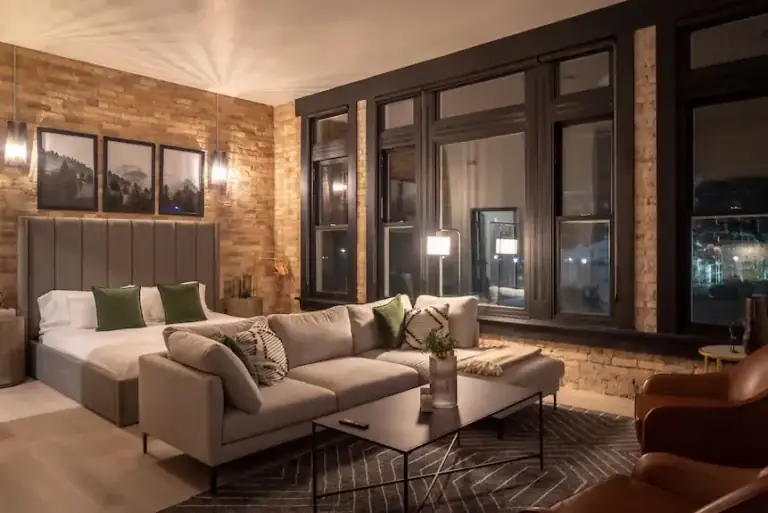
Analyzing these operational challenges requires recognizing the tension between metropolitan accessibility and absolute interior seclusion. An analytical manager evaluating a historic loft sanctuary in Manhattan will find that exposed brick introduces severe acoustic transmission issues. Planners relying exclusively on surface-level marketing descriptions routinely miss critical operational constraints. Furthermore, mastering the principles behind american urban retreat destinations usa involves assessing how architects and municipal preservation boards collaborate. This coordination establishes optimal operational baselines and long-term asset appreciation across diverse downtown topographies.
Deep Contextual Background
The historical evolution of metropolitan restorative spaces traces its roots to late-nineteenth-century industrial transformation. Urban planners began carving out protected green spaces amid dense manufacturing districts. Properties like carriage house compounds in Boston established an urban design vernacular prioritizing inward-facing courtyards and thick masonry walls.
Throughout the late twentieth century, industrial loft conversions transformed the landscape. Architects experimented with sound-dampening double-paned glazing systems and subterranean courtyards. Architectural ambition introduced new operational vulnerabilities. Urban properties struggled with municipal noise codes and aging utility infrastructure. Examining the domestic market requires navigating a mature, competitive sector where boutique ownership groups define the baseline of exceptional urban travel execution.
Conceptual Frameworks and Mental Models
Evaluating the operational maturity of metropolitan retreats relies on structured mental models:
-
The Urban Acoustic Isolation Index: Measures Sound Transmission Class ratings relative to street-level traffic density.
-
The Spatial Zoning and Privacy Gradient: Evaluates physical separation between public thoroughfares and private interior zones.
-
The Architectural-Historical Integration Ratio: Assesses how successfully a property preserves historic character while upgrading mechanical systems.
-
The Metropolitan Logistical Proximity Model: Quantifies the operational efficiency of private entrances and subterranean parking.
Key Categories or Variations
| Urban Sanctuary Category | Primary Architectural Profile | Core Operational Trade-Off |
| Historic Brownstone Enclaves | Multi-level masonry townhouses with walled courtyard gardens | Delivers neighborhood integration offset by steep staircases and maintenance limits |
| Industrial Loft Refuges | Converted warehouse spaces featuring heavy timber and massive ceilings | Maximizes interior volume offset by difficult acoustic management across open floor plans |
| Modern High-Rise Glass Penthouses | Top-floor residential towers featuring skyline views and elevator access | Provides vertical isolation offset by exposure to wind loads and mechanical rumble |
| Subterranean Courtyard Estates | Low-rise sanctuaries centered around private, walled water gardens | Offers street-level privacy offset by limited natural light penetration on lower levels |
| Boutique Heritage Inn Suites | Restored mercantile buildings operating with restricted guest counts | Ensures quiet exclusivity offset by limited on-site commercial amenities and dining hours |
| Ecological Urban Pavilions | Contemporary structures incorporating living green walls and passive solar | Provides environmental sustainability offset by complex custom mechanical upkeep |
When applying decision logic to these variations, curators must align suite selection with acoustic resilience and privacy requirements. Brownstone enclaves and industrial lofts suit creative executives seeking historic character. Meanwhile, high-rise glass penthouses attract corporate boards prioritizing absolute vertical security and streamlined transit access.
Detailed Real-World Scenarios
Executing a Confidential Executive Rest in a Historic Brownstone
A venture capital principal requires a two-week quiet writing residency in downtown Boston without office interruptions.
-
Constraint: The property sits on a historic street directly adjacent to an active municipal bus route.
-
Failure Mode: Low-frequency vibration and heavy street noise penetrate single-pane windows, disrupting concentration.
-
Decision Point: Mandate secondary interior acoustic glazing retrofits and select upper-floor study spaces facing internal courtyards.
Coordinating a Private Diplomatic Delegation in an Industrial Loft Refuge
A family office curator manages an international delegation staying within a converted industrial loft in Chicago.
-
Constraint: Strict security protocols prohibit public lobby transit while local paparazzi monitor the main entrance.
-
Failure Mode: Delegation members are exposed to public view upon arrival through standard building elevators.
-
Decision Point: Contract directly with the property operator to utilize a secure subterranean parking garage and dedicated loading bay.
Planning, Cost, and Resource Dynamics
Executing a procurement strategy for metropolitan sanctuaries involves balancing administrative oversight expenses and specialized acoustic engineering outlays against the value of urban privacy. The economic model requires analyzing indirect expenses—such as private security details and customized HVAC filtration—against total project expenditures.
| Economic Variable | Financial Variability | Strategic Impact on Asset Evaluation |
| Acoustic Engineering and Glazing Upgrades | High Capital Outlay | Mitigates urban noise pollution to establish interior quietude thresholds |
| Private Subterranean Parking and Security | Fixed Operational Cost | Secures private ingress and egress channels away from pedestrian traffic |
| Customized Air Filtration and Maintenance | Dedicated Operating Expense | Ensures hospital-grade indoor air quality within dense metropolitan environments |
| Specialized Urban Legal and Zoning Counsel | Variable Professional Fee | Navigates complex municipal short-term rental and historic preservation laws |
Tools, Strategies, and Support Systems
-
Decibel and Acoustic Auditing Software: Specialized diagnostic tools measuring ambient noise floors across zones.
-
Encrypted Metropolitan Concierge Networks: Direct communication channels with security teams and private drivers.
-
Subterranean Access Management Systems: Keyless entry platforms controlling private elevator banks and garage gates.
-
Specialized Urban Legal Counsel: Legal professionals drafting confidentiality agreements and municipal compliance documentation.
-
Hospital-Grade Air Quality Monitors: Continuous particulate sensors tracking indoor air purity against smog intrusion.
Risk Landscape and Failure Modes
The primary operational hazard inherent in metropolitan sanctuary travel involves underestimating urban infrastructural volatility. Planners frequently assume downtown properties operate with absolute immunity to municipal power grid fluctuations or water main repairs. When unexpected street-level construction occurs, sudden utility failures can compromise the restorative environment.
Another compounding risk relates to historic preservation constraints. Many exceptional urban properties sit within strict historic districts where municipal codes prohibit exterior modifications or modern security camera placements. Violating these mandates results in immediate fines, legal disputes, and operational disruption.
Governance, Maintenance, and Long-Term Adaptation
Sustaining operational protocols across metropolitan travel portfolios requires a disciplined administrative governance framework. Family offices and corporate travel teams must institute pre-arrival acoustic audits, verifying that sound attenuation and air filtration systems operate efficiently. If a property manager demonstrates inadequate maintenance, asset managers must initiate replacement protocols.
Furthermore, risk governance must adapt to shifting urban density patterns, noise ordinances, and transportation layouts. Maintaining ongoing dialogues with historic preservation boards ensures that partnered property networks invest in sustainable urban infrastructure. Proactive governance protects capital and guarantees operational excellence across all metropolitan deployments.
Measurement, Tracking, and Evaluation
-
Interior Ambient Noise Floor: Measures maximum and average sound levels within sleeping zones during peak hours.
-
Infiltration and Privacy Incident Frequency: Tracks breaches of private perimeter security or unauthorized public access.
-
Air Quality Index Internal Differential: Assesses the efficiency of property filtration systems in maintaining pristine indoor air.
-
Transit Ingress Efficiency Rating: Quantifies duration and privacy levels required for vehicular arrival through secure subterranean channels.
Common Misconceptions and Oversimplifications
-
Myth: Booking a luxury property in a major metropolitan center guarantees complete quietude on upper floors. Reality: High-rise towers frequently experience wind shear noise and transmission from distant highway corridors.
-
Myth: Historic brownstone and loft properties possess superior natural insulation due to thick brick walls. Reality: Historic masonry often conducts low-frequency vibrational rumble from subway lines directly into living spaces.
-
Myth: Standard hotel cancellation policies apply equally to bespoke metropolitan architectural retreats. Reality: Independent urban operators enforce customized, non-negotiable contract terms and strict deposit schedules.
-
Myth: Private security details can be deployed spontaneously on public sidewalks without municipal permits. Reality: Downtown municipalities enforce strict regulations regarding private security positioning and street blockages.
-
Myth: Urban architectural retreats require zero specialized preparation regarding traffic navigation. Reality: Dense metropolitan cores demand precise pre-planning for vehicular access and loading zones.
-
Myth: On-site culinary teams operate with independent food supply chains isolated from city traffic. Reality: Urban kitchen deliveries remain vulnerable to downtown delivery truck restrictions and traffic congestion.
Ethical, Practical, or Contextual Considerations
Evaluating management of rare metropolitan properties intersects with broader discussions surrounding gentrification and the impact of exclusive commercial conversions on local housing markets. As principals utilize urban residential enclaves for private retreats, ensuring local communities are respected remains critical. Progressive travel curators address these challenges by partnering with properties investing in local historic preservation, employing neighborhood staff, and contributing directly to community stabilization trusts.
Conclusion
Mastering complexities involved in identifying, evaluating, and executing travel portfolios centered on american urban retreat destinations usa requires an uncompromising analytical perspective. True authority involves looking past consumer aesthetic marketing to examine acoustic engineering physics and metropolitan transit logistics. Approaching exceptional urban curation with professional rigor ensures deployments achieve operational resilience and long-value.