Best Private Luxury Suites in the US: Definitive Guide
The acquisition and deployment of top-tier residential hospitality assets across North America represent an intricate intersection of architectural engineering, spatial psychology, and confidential administrative logistics. When high-net-worth principals, diplomatic delegations, and corporate boards secure premier accommodations, standard consumer booking workflows fail entirely. Evaluating the upper echelon of domestic hospitality requires moving far beyond glossy promotional imagery to examine acoustic isolation thresholds, secure private elevator infrastructure, and proprietary inventory allocations that never appear on public distribution channels.
Furthermore, the modern high-end lodging market across the United States features a bifurcated ecosystem. On one side stand historic urban landmarks boasting multi-floor penthouses with private butler stations; on the other exist remote wilderness pavilions and secluded coastal compounds emphasizing radical isolation. Identifying the finest options demands an uncompromising analytical lens capable of weighing the structural trade-offs between dense metropolitan towers and sprawling low-density compounds. Consequently, recognizing how to properly assess and secure the best private luxury suites in the us remains a defining competency for advanced travel curators and family office directors.
Navigating this specialized segment requires a rigorous structural approach that treats premier hospitality spaces as critical operational assets rather than mere overnight lodgings. Whether coordinating a high-stakes corporate summit in Manhattan or securing an ultra-private desert pavilion in Utah, mastering the nuances of inventory acquisition, unlisted service agreements, and spatial verification protects capital and ensures absolute operational alignment. Ultimately, this comprehensive guide delivers an objective examination of the frameworks, error taxonomies, and strategic countermeasures required to govern elite property bookings with absolute editorial precision.
Understanding “best private luxury suites in the us”

The phrase best private luxury suites in the us is frequently co-opted by commercial aggregators and lifestyle publications that reduce complex architectural assets to superficial popularity rankings. Consequently, these consumer-facing lists ignore the structural realities of proprietary inventory holds, master lease agreements, and unlisted high-security VIP accommodations. In professional asset evaluation and travel curation, however, evaluating best private luxury suites in the us demands a rigorous examination of verifiable metrics. These metrics include sound transmission class ratings between adjacent guest floors, dedicated private elevator access speeds, and perimeter security integration for high-profile occupants. A common misunderstanding assumes that paying top-tier published nightly rates automatically guarantees absolute privacy and customized architectural layouts. Consequently, observers frequently overlook how standard urban high-rise suites share back-of-house service corridors that compromise acoustic privacy and executive confidentiality.
Analyzing these intricate domestic hospitality markets requires understanding the systemic tension between commercial hotel revenue models and elite guest privacy expectations. For instance, an analytical travel manager attempting to secure a multi-room penthouse delegation in New York or Los Angeles will find that standard public reservation channels display zero availability due to permanent inventory holds for diplomatic and entertainment accounts. Planners who rely exclusively on consumer reservation portals routinely miss these critical inventory dynamics. Therefore, mastering the evaluation of the best private luxury suites in the us involves examining how hotel directors of sales, private security directors, and corporate travel curators interact. Ultimately, this coordination establishes optimal booking pathways, transparent ancillary inclusions, and long-term asset value across vastly different regional markets.
Deep Contextual Background
The historical evolution of ultra-luxury suite accommodations in the United States traces its lineage back to the grand Gilded Age palace hotels of New York, Chicago, and San Francisco. During this formative era, opulent properties were designed to function as permanent urban residences for industrialists and visiting European nobility, featuring expansive floor plans, private dining rooms, and dedicated staff quarters. Consequently, architectural planning emphasized permanence, heavy masonry construction, and intricate decorative arts that reflected the apex of domestic craftsmanship.
Throughout the late twentieth century, the rise of international hospitality brands and standardized corporate design transformed the landscape, prioritizing uniform room layouts and high-volume inventory turnover. However, a powerful counter-movement emerged at the turn of the twenty-first century, driven by discerning travelers demanding hyper-customized residential spaces, holistic wellness integration, and complete seclusion. Today, examining the top tier of domestic luxury requires navigating a mature, highly competitive market where architectural pedigree, historical narrative, and absolute design integrity define the baseline of premier accommodations.
Conceptual Frameworks and Mental Models
Analyzing the operational excellence and spatial suitability of elite domestic suites relies on several structured mental models:
-
The Spatial Privacy and Security Gradient: Measures the physical distance, secure elevator separation, and perimeter access control protecting a suite from public hotel zones.
-
The Acoustic Isolation Index: Evaluates sound transmission barriers across floors and demising walls to guarantee complete confidentiality for high-stakes meetings.
-
The Architectural Integration Matrix: Assesses how successfully a suite merges indoor living areas with private outdoor terraces, plunge pools, or natural landscapes.
-
The Service-to-Space Ratio: Quantifies the allocation of dedicated butler, culinary, and housekeeping personnel relative to the square footage of the suite.
Key Categories or Variations
| Suite Typology | Primary Geographic Hub | Core Trade-Off or Constraint |
| Metropolitan Tower Penthouses | New York, Chicago, Los Angeles | Unmatched urban skyline views and central positioning paired with high-altitude vertical transit reliance |
| Coastal Cliffside Seclusion Pavilions | Big Sur, Pacific Northwest, Florida Keys | Absolute natural immersion and privacy offset by weather exposure and remote transit logistics |
| Desert Modernist Enclaves | Palm Springs, Greater Scottsdale, Canyon Point | Expansive architectural design and thermal integration balanced against extreme desert climate management |
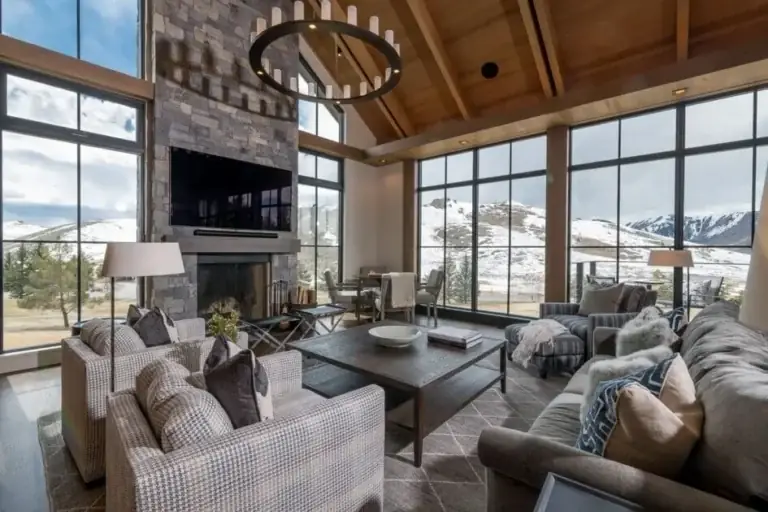
| Alpine Timber Wilderness Lodges | Jackson Hole, Aspen, Lake Tahoe | Panoramic mountain backdrops and heavy timber construction balanced against seasonal accessibility limits |
| Historic Heritage Estate Suites | Savannah, Charleston, Boston | Deep cultural pedigree and romantic courtyard layouts paired with strict preservation zoning |
| Island Resort Sanctuary Villas | Hawaiian Islands, Private Florida Keys Cays | Tropical luxury and oceanfront isolation offset by complex supply chain and logistics constraints |
When applying decision logic to these variations, travelers and asset curators must align property typologies with the explicit strategic objective of their stay. Metropolitan tower penthouses suit executive delegations and financial leaders requiring immediate proximity to urban financial centers and corporate boardrooms. Conversely, desert modernist enclaves and coastal cliffside pavilions attract principals seeking absolute seclusion, contemplative quiet, and deep environmental connection.
Detailed Real-World Scenarios
Securing a Metropolitan Penthouse for a Confidential Corporate Board Merger
A corporate governance team coordinates an emergency executive retreat inside a multi-story Manhattan penthouse suite.
-
Constraint: The suite’s primary entertaining salon features floor-to-ceiling glass partitions with zero acoustic insulation from the lower-level foyer, risking audio leakage of sensitive merger details.
-
Failure Mode: Ambient noise from elevator banks and lack of sound masking compromise the confidentiality of high-level strategic discussions.
-
Decision Point: Partner with the property’s chief audio-visual engineer to deploy temporary acoustic dampening panels and white-noise emitter arrays prior to executive arrival.
Hosting an Ultra-Private Executive Summit in a Remote Desert Pavilion
An investment firm organizes a multi-day strategic planning session for twelve senior partners within a secluded desert resort compound in Utah.
-
Constraint: Extreme ambient daytime temperatures restrict outdoor sessions, while the remote location limits immediate access to specialized catering personnel.
-
Failure Mode: Thermal discomfort and culinary bottlenecks disrupt the intensive scheduling requirements of the executive retreat.
-
Decision Point: Reserve the property’s adjacent private breakout villas to expand climate-controlled workspace and contract dedicated private culinary staff for the duration of the stay.
Planning, Cost, and Resource Dynamics
Executing a comprehensive curation strategy for elite domestic suite accommodations involves balancing exceptionally high nightly tariffs against the immense value of absolute security, spatial privacy, and customized service. The economic model requires assessing indirect costs, such as private aviation arrangements, security detail accommodations, and bespoke provisioning outlays, against baseline room rates.
| Economic Variable | Financial Variability | Strategic Impact on Asset Evaluation |
| Base Suite Tariffs in Elite Properties | Extreme Market Variability | Reflects premier architectural design, square footage, and limited inventory |
| Dedicated Security and Detail Lodging | Fixed Operational Cost | Ensures complete perimeter control and confidential staging areas |
| Bespoke Culinary and Provisioning Outlays | Variable Operational Cost | Replaces standard room service with hyper-customized private dining programs |
| Private Aviation and Transfer Logistics | Moderate Operational Surcharge | Required for remote wilderness and island resort suite deployments |
Tools, Strategies, and Support Systems
-
Proprietary Portfolio Management Dashboards: Centralized software tracking active luxury reservations, unlisted inventory holds, and contract terms across global portfolios.
-
Direct Property Sales Director Directories: Maintained contact directories linking corporate planners directly to hotel general managers and directors of sales.
-
Specialized Consortia and Preferred Partner Networks: Professional advisory groups providing verified property ratings and exclusive booking protections.
-
Secure Architectural Floor Plan Repositories: Internal databases storing verified spatial layouts, secure elevator routes, and acoustic ratings for frequent corporate retreat properties.
-
Encrypted Communication Protocols: Secure digital messaging platforms utilized for transmitting sensitive guest arrival details and security requirements to property general managers.
Risk Landscape and Failure Modes
The primary operational hazard inherent in securing elite domestic suites involves relying on public booking channels that lack inventory guarantees. When corporate planners or family offices book through third-party aggregators without direct property management confirmation, systemic overbooking or sudden room reassignments can result in devastating operational failures upon check-in.
Another compounding risk relates to perimeter security vulnerabilities in open urban properties. High-profile principals frequently underestimate the public exposure associated with hotel ground-floor arrivals and shared elevator banks. Utilizing properties with private subterranean parking garages, dedicated security elevators, and secure-access guest floors helps neutralize these operational exposures.
Governance, Maintenance, and Long-Term Adaptation
Sustaining long-term risk mitigation across elite travel portfolios requires a disciplined administrative cadence. Corporate procurement departments and family offices must institute post-stay reservation audits, comparing initial booking expectations against actual on-property security, acoustic, and service performance. If a specific luxury property consistently misrepresents its suite inventory or fails to honor privacy commitments, travel managers must blacklist the property from future deployments.
Furthermore, travel governance must adapt to shifting security threats, evolving hospitality management contracts, and new digital access technologies. This involves maintaining ongoing dialogues with private security consultants, updating corporate reservation guidelines, and retraining administrative personnel in rigorous verification protocols. Proactive governance safeguards corporate capital and ensures consistent operational excellence across all domestic travel deployments.
Measurement, Tracking, and Evaluation
-
Spatial and Privacy Incident Ratio: Measures the percentage of elite suite bookings that experience perimeter security breaches or privacy complaints.
-
Contract Compliance and Verification Score: Tracks the proportion of reservations that successfully complete all pre-arrival spatial, acoustic, and technical audit steps.
-
Cancellation Penalty Loss Percentage: Quantifies the financial impact of forfeited deposits relative to total annual luxury travel expenditures.
-
Vendor Portfolio Reliability Index: Evaluates the historical booking accuracy and service consistency associated with specific domestic luxury hotel brands.
Common Misconceptions and Oversimplifications
-
Myth: Booking the most expensive published suite in a major American city automatically guarantees absolute privacy and security. Reality: Many high-priced urban suites feature exposed public terraces or shared service elevators that compromise high-profile security.
-
Myth: High-end credit card concierge desks possess exclusive access to fully booked domestic luxury suites. Reality: Concierge desks utilize standard distribution channels and cannot override permanent diplomatic or corporate inventory holds.
-
Myth: Five-star luxury resorts in the United States maintain identical architectural standards across all of their multi-room suites. Reality: Flagship penthouses and remote villas vary significantly in layout, view orientation, and private amenity inclusions.
-
Myth: Verbal agreements with property general managers hold equal weight to written master service contracts. Reality: Management turnover and shift changes mean verbal agreements are frequently forgotten upon guest arrival.
-
Myth: Remote wilderness and island sanctuary suites are immune to urban security and privacy concerns. Reality: Isolated properties often present unique perimeter surveillance challenges due to expansive natural acreage.
-
Myth: Standard travel agency cancellation terms apply uniformly across all elite domestic suite categories. Reality: Premier properties frequently enforce strict, non-standard cancellation windows and deposit requirements for their top-tier inventory.
Ethical, Practical, or Contextual Considerations
Evaluating elite domestic hospitality also intersects with broader discussions surrounding community impact, environmental conservation in delicate ecosystems, and labor standards within high-end hospitality operations. As developers construct sprawling desert compounds and cliffside pavilions, balancing economic luxury development with the preservation of natural landscapes and indigenous cultural heritage is paramount. Progressive property owners address these concerns by investing in sustainable energy infrastructure, sourcing labor locally, and supporting regional conservation initiatives.
Conclusion
Mastering the complexities involved in identifying, evaluating, and securing premier domestic accommodations requires an uncompromising analytical perspective. True authority in this domain involves looking past commercial marketing imagery to examine architectural floor plans, secure transit infrastructure, and direct property communications. By approaching the exploration of elite properties with professional rigor and intellectual honesty, travelers and asset managers ensure that their deployments achieve absolute operational alignment, financial protection, and enduring value.